
From Türkiye to Syria: What Happens to the Kurdish Political Movement After Armed Struggle?

By Alina Immken
Tensions are rising in northeastern Syria only weeks after the Kurdish-led Syrian Democratic Forces were integrated into the country’s state institutions. In both Türkiye and Syria, the longstanding conflicts involving Kurdish armed groups have entered a new phase marked by promises of disarmament, integration, and political reforms by the state. Now, the question is whether the move from armed struggle to formal politics will generate greater political and cultural rights, or only increase central government control?
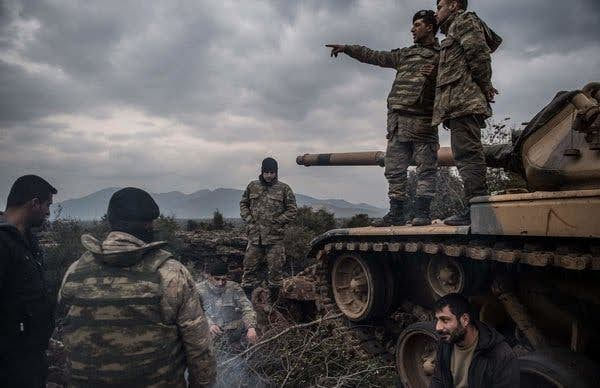
Tensions Rise in Northeastern Syria
The Kurds are estimated to make up around 9% of the Syrian population in the northeastern regions of Jazeera, Efrin, and Ain al-Arab. Following decades of marginalisation under the Assad dynasty, the civil war enabled them to construct a de facto autonomous zone in the northeast of the country. In August 2026, an integration agreement commenced the process of integrating Kurdish autonomous institutions, including their military forces, one being the Syrian Democratic Forces (SDF), into the national Syrian army. This process was heavily supported by the government of Türkiye. However, fearing repression under newly reasserted Syrian national control over the Northeast, new tensions have emerged between Kurdish communities and the post-war government. The government’s limiting of Kurdish language classes, the abduction of former SDF fighters who have now joined the Syrian army in Hassakeh, and the peaking of oil prices due to the removal of subsidies after the nationalisation of northeastern oil fields have sparked protests within Kurdish communities. Demonstrators shut down the M4 highway, where they blocked the passage of oil trucks until the oil prices were lowered, and rioted in a jail in Kobani, leading to nine deaths. The Women’s Protection Units (YPJ), who had fought alongside the SDF against ISIS and the Turkish military operations in the Kurdish autonomous regions, have also experienced tensions in the process of integration, as military authorities in Damascus formally oppose women in combat.
Türkiye’s Relationship to Syrian Kurds
Türkiye has actively opposed Kurdish autonomy in northeastern Syria. This is rooted in decades-long conflict between the Kurdistan Workers’ Party (PKK) in Türkiye and Ankara’s view of the Syrian Kurdish-led forces as closely linked to the organisation. Since the establishment of the Republic of Türkiye with Mustafa Kemal Atatürk, it has been aiming to establish a unitary Turkish state and protect its territorial and cultural integrity. This goal includes the prevention of an emerging autonomous Kurdish entity within and around Turkish borders. Similar to Syria under Assad, the country implemented forced assimilation policies to eradicate Kurdish language, culture, and political autonomy, have repressed protests for political recognition and rights, and participated in an armed struggle with the Kurdistan’s Workers Party (PKK), founded by Abdullah Öcalan in 1978. Following this, Türkiye has also ordered the integration of the SDF into the official Syrian army. This is in Türkiye’s interest, because it sees the emergence of an autonomous Kurdish entity along its border as an existential threat. Kurdish uprisings in Syria could motivate similar developments among Türkiye’s Kurds, and PKK militants could be kept safe in the Northern Syrian regions.
Türkiye has therefore used military operations and political pressure in northern Syria to eliminate the threat of strengthened Kurdish unity. While the PKK, the SDF and the Syrian YPG (People’s Protection Units) are all distinct organisations, their ideological, political, and social links have led Türkiye to regard the Syrian Kurdish forces as connected to the PKK. This is why the Turkish military under President Erdoğan not only conducted offensives against the Kurds in Türkiye in 2015, but also invaded northern Syria and conducted airstrikes against both YPG and PKK targets in Syria and Iraq. International efforts to resolve the Syrian conflict were in part complicated by Türkiye’s opposition to Kurdish participation in Syrian peace talks. Though distinct phenomena, Türkiye and Syria’s relationship to the Kurds have thus influenced each other and been deeply intertwined.
What does this mean for Regional Peace?
Despite rising tensions, both Türkiye and Syria have implemented changes to the political landscape of the Kurdish question. Türkiye’s armed struggle entered a new phase in October of 2024 with the starting of dialogue between Öcalan and Devlet Bahçeli, leader of the Turkish Nationalist Party (MHP). This led to an agreement of PKK disarmament in turn for legal reforms increasing Kurdish rights in May of 2025. Türkiye passed the “Law on Strengthening National Solidarity and Social Cohesion” in August 2026 to potentially suspend sentences for PKK members once disarmament has been confirmed. Syrian developments have mirrored these changes. In March of 2025, the SDF commander Mazloum Abdi and President Ahmed al-Sharaa agreed to integrate SDF forces and autonomous institutions into the state, including the succession of control over border crossings and oil fields. In return, the president issued a decree committing the state to restoring Kurdish citizenship, recognising cultural and linguistic rights, and including Kurdish traditional holidays in the national calendar. On the 20th August, the integration process was announced as completed. The PKK’s decision to end its armed struggle and the SDF’s integration process in Syria have thus created meaningful changes in the political landscape of the region, raising questions of whether this will also lead to meaningful political changes for the Kurdish minority.
Nevertheless, although the integration of armed organisations has mitigated conflict in the region, it has not in itself resolved the longstanding questions surrounding Kurdish recognition, language rights, political representation, and local self-governance. The reforms promised by both states and Kurdish fighters have yet to be fully implemented to regain trust and mitigate hostility. The newly passed law in Türkiye excludes the suspension of pre-2005 life sentences, meaning the status of PKK leader Öcalan remains unchanged. As a political symbol, the commutation of his sentence or the improvement of his living conditions would signal full commitment by the Turkish government to make peace with the PKK. Similarly, the complete certification of PKK disarmament is needed to alleviate Turkish hostility and fear of renewed opposition. In Syria, former SDF personnel remain unemployed and marginalised from the national military, and the direction of integration for the region’s education system remains unclear. In both countries, the state’s conception as a centralised nation-state built around a specific national identity remains in tension with the full recognition of Kurds as equal members of the state. Ultimately, the end of armed struggle in Türkiye and the integration of Kurdish forces into the national Syrian state mark a turning point for the Kurdish political movement, but lasting peace depends not only on disarmament, but also on whether both states are willing to translate military integration into full political recognition, cultural rights, and Kurdish participation in governance.
Sources: Al Jazeera Centre for Studies, AP News, Deutsche Welle, Mohammed and Romano, O’Connor, The International Centre for the Study of Radicalisation and Political Violence, The United States Institute of Peace Report
Written by Alina Immken
Edited by Olivia O’Mahony


Comments